Discover your place in the lunar year.
Moon phases and Germanic seasonal festivals for everyday life, with traceable sources and room for your own practice.
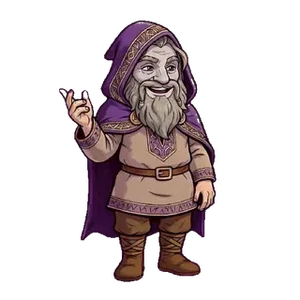
"Ártala" (Old Norse for "year counter") is the word the elves use for the moon in the Eddic poem Alvíssmál – because in Germanic heathendom, timekeeping was governed by the moon. Alvíss, the "All-Wise" – a dwarf who knows all things by all their names – accompanies you as mascot through the calendar.
After publishing the Germanic lunisolar calendar as a printed wall calendar under the name "Ártala" from 2017 to 2021, I can finally offer it as an app.
"Reconstructing a lunisolar calendar in book form is a very theoretical affair. With the help of an app like Ártala, something so abstract becomes a tool that allows you to feel your way into the historical qualities of time and, if you wish, to revive them for your own everyday life."
Six Views of Time

Month View
The Germanic lunar month with Gregorian dates as reference points, moon phases, festivals, and matching illustrations.

Day View
Key data for the day: current moon phase, countdowns to lunar phases and festivals, plus Hávamál quotes.

Rune Oracle
Draw the daily rune and perform three-rune readings multiple times a day – in Elder Futhark, Younger Futhark, or Anglo-Saxon Futhorc.

Moon View
The moon in its current phase; the highlighted runes show the symbols drawn in the oracle, each in its corresponding colour.

Wheel of the Year
Not the wheel of the year you might expect: see where you stand in the cycle, when each festival falls, and navigate straight into the festival lexicon.

Solarhringr
The only true new creation in the app: historically attested divisions of the day, translated into the concept of temporal hours.
Alvíss Knows Every Name
In the Alvíssmál, the dwarf Alvíss names the moon in the tongues of all beings: among men it is called "Máni" – and "kalla alfar ártala", the elves call it year counter. Now the app itself knows more than one name for the moon: it speaks twelve languages – on Android, iOS and on the web.
- DeutschMond
- EnglishMoon
- ÍslenskaMáni
- NorskMåne
- DanskMåne
- SvenskaMåne
- SuomiKuu
- NederlandsMaan
- FrançaisLune
- ItalianoLuna
- EspañolLuna
- PortuguêsLua
Recommended by Eldaring e. V.
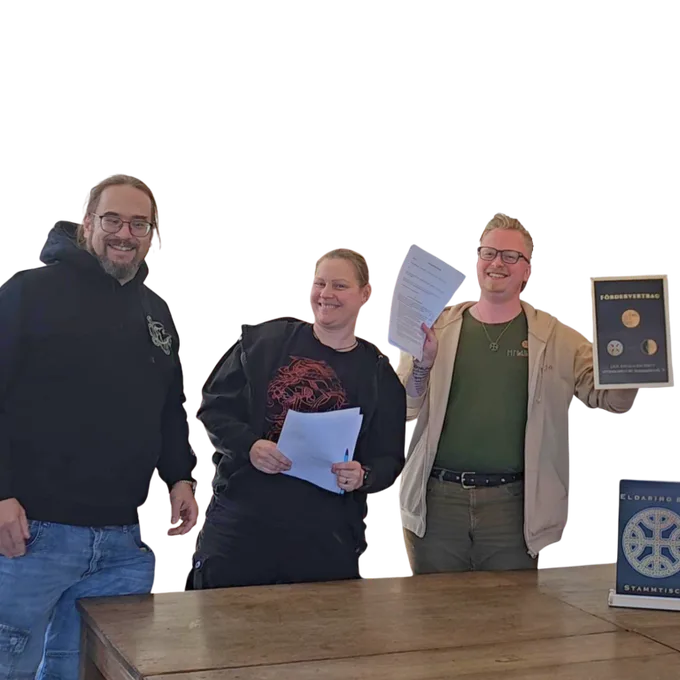
Eldaring, the largest Germanic Heathen organisation in the German-speaking world, endorses and cooperates with Ártala. With the signing of a cooperation agreement, the Eldaring board and Ártala have committed to raising mutual public awareness.
In addition, the previously entirely self-funded project has been made more accessible through the organisation's support – resulting in lower prices for all future customers, and particularly so for Eldaring members. Eldaring stands for an open, inclusive, and academically grounded approach to Germanic Heathendom and is a recognised non-profit.
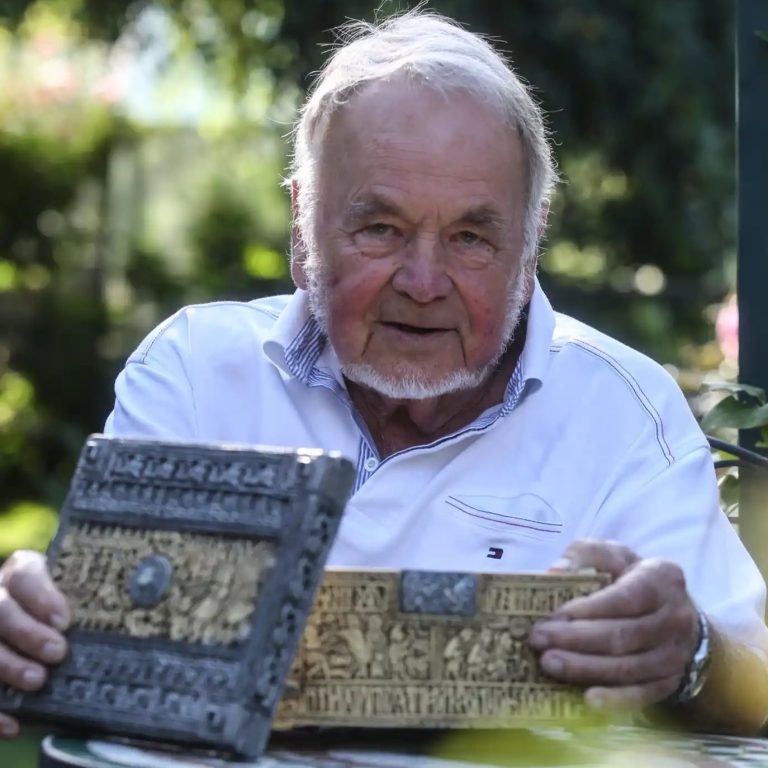
"With calendars we plan the future, but with the lunar calendar we also illuminate a piece of our past on the way to tomorrow. That is the magic of Damian Haller's creation and reconstruction called Ártala."
"Those who discover Germanic Heathendom today almost never encounter the few scientifically documented remnants right away. With the Ártala calendar, having academically grounded knowledge of how the year was truly divided and when each festival was actually celebrated is an invaluable help!"
4.83 of 5 stars on ProvenExpert 6 reviews from the wall-calendar era (2018–2019)
Excerpts from public reviews on Google Play; most English quotes are our translations of German originals. We do not verify whether reviewers actually purchased the app – Google Play only shows reviews from accounts that installed it. We show a selection of positive reviews; the averages above include all ratings in each store.
Questions about the Germanic lunar calendar
What is a Germanic lunar calendar?
A Germanic lunar calendar (more precisely: a lunisolar calendar) is a timekeeping system in which each month begins with the first visible new moon crescent. The months are bound to the solar year through a leap month rule anchored to the winter solstice. The festivals of the year cycle – Yule, Sumarmál, the Winter Nights and the Blóts – arise from the interplay of moon and sun.
What is a lunisolar calendar?
A lunisolar calendar combines lunar months (each approx. 29.5 days) with the solar year (approx. 365.25 days). Since twelve lunar months amount to only about 354 days, a thirteenth leap month is inserted in certain years to keep the months aligned with the seasons. The Germanic peoples, Jews, Chinese, Indians and many other cultures used or still use lunisolar calendars.
How does the Germanic leap month work?
In the Germanic lunisolar calendar, the winter solstice serves as the anchor. If after twelve lunar months the winter solstice does not yet fall within the last month, a thirteenth leap month is inserted. Andreas E. Zautner reconstructed this system from historical sources (Bede, Grágás, Adam of Bremen).
When is Yule (the Julfest)?
In Nordberg’s reconstruction, Yule falls on the full moon of Late Yule-Month, which begins with the first new moon after the winter solstice. Nordberg gives January 5 to February 2 as the possible window. Ártala calculates the date using its crescent and solstice rules; the article explains the distinction.
Which languages is Ártala available in?
Ártala is available in twelve languages: German, English, Icelandic, Norwegian, Danish, Swedish, Finnish, Dutch, French, Italian, Spanish and Portuguese. The app starts in your system language and can be switched to any other language at any time in the settings – on Android, iOS and on the web.
What are the Rauhnächte (Twelve Nights)?
The Twelve Nights are marked from December 25 to January 5 in Ártala; the last night ends on the morning of January 6. Their link with the difference between the lunar and solar year is an interpretation within the reconstructed model. Medieval sources and present-day practice are distinguished in the article.
 The Germanic Lunar Calendar

Start counting the seasons.
In the stores – or straight in the web app.